
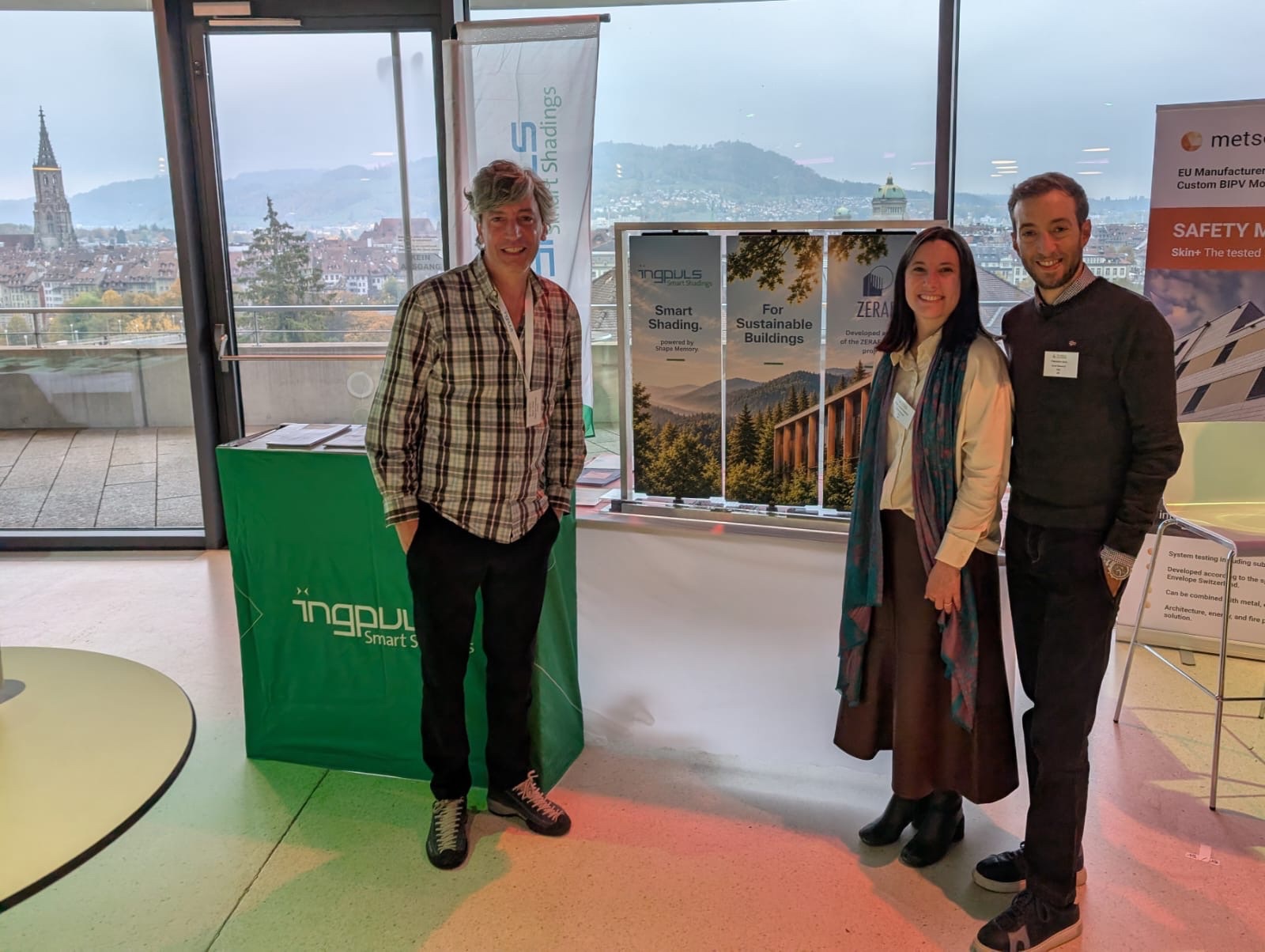
ZERAF took part in the Advanced Building Skins Conference & Expo 2026 in Bern, presenting new research and a working demonstrator of its adaptive façade technology.
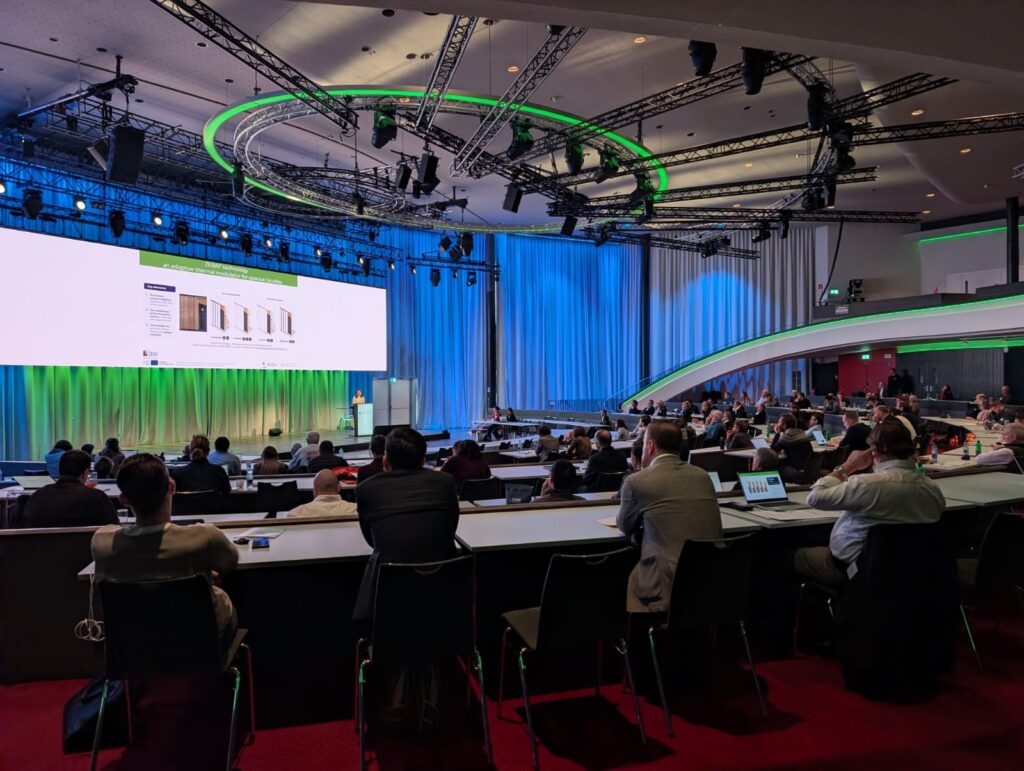
At the conference, Miren Juaristi Gutiérrez from Eurac Research presented the work “ZERAF: an innovative adaptive opaque façade driven by silent, low-energy SMA actuation.” The paper was developed with researchers from Eurac Research, Eindhoven University of Technology and Ingpuls Smart Shadings.
A façade that responds to changing conditions
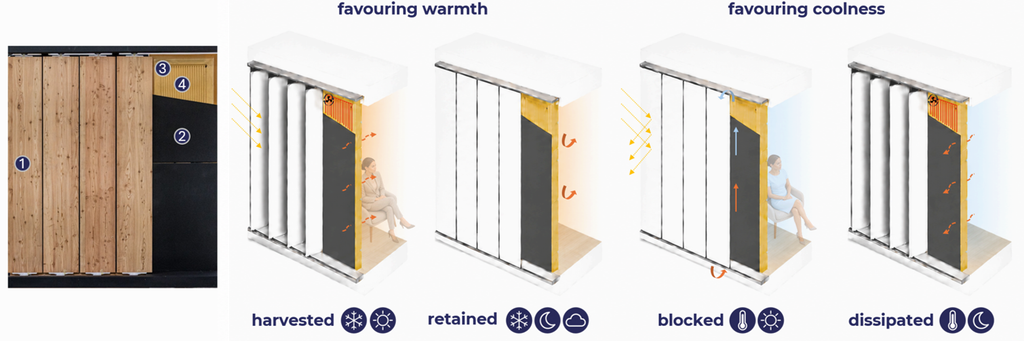
ZERAF is developing an opaque façade that can adapt to the needs of a building. It combines movable external cladding, adjustable insulation and automated controls to manage heat transfe as indoor and outdoor conditions change.
The research brings together laboratory testing, full-scale prototypes and energy simulations. A case study of a deep renovation in Madrid indicated that the system could reduce heating and cooling needs and therefore operational carbon emissions even after accounting for the energy used to operate the façade.
From research to a working demonstrator
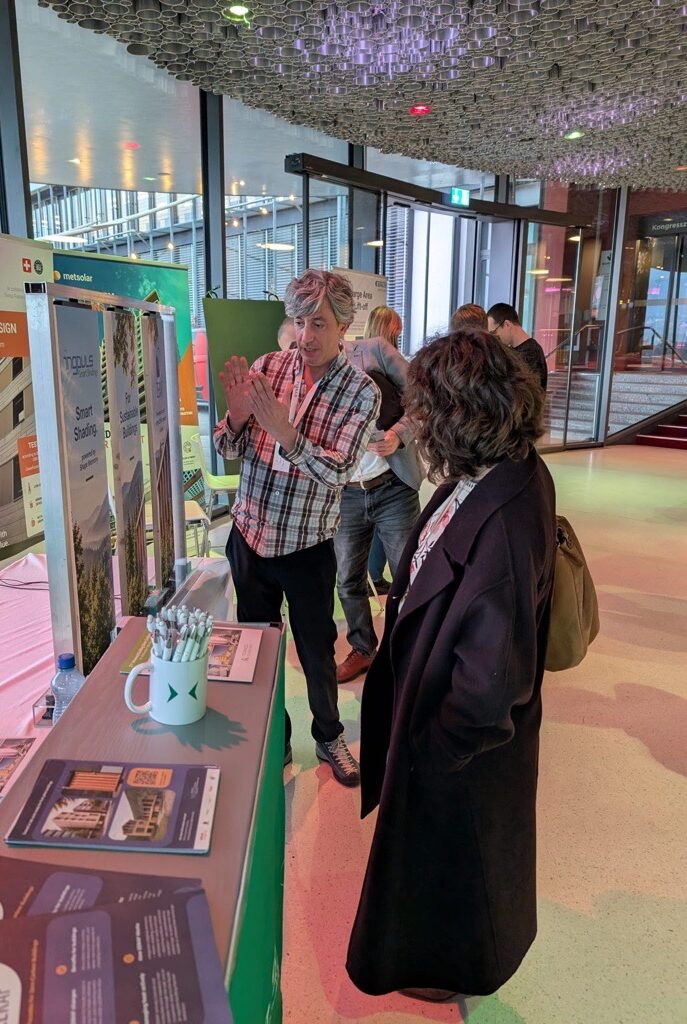
Visitors could also see the technology in action at the Ingpuls Smart Shadings stand.
The demonstrator featured the Shape Memory Alloy actuator developed to move the façade’s louvres. Shape Memory Alloys actuator allows the louvres to adjust solar and wind exposure. It is a compact mechanism that operates quietly and uses little energy, and is especially promising for adaptive building-envelope applications.
Moving from innovation to the market
The conference also offered insights into how the façade industry is evolving, particularly in the field of building-integrated photovoltaics.
Many of the solutions on display were designed to meet the architectural needs of individual buildings. This highlighted a key challenge for emerging façade technologies: offering architects enough design flexibility while using standard components and production methods that support wider adoption.
The two goals do not necessarily conflict. Standard technologies, components and interfaces can be combined with design tools that allow architects to configure solutions for different buildings.
This is an important consideration for ZERAF’s path to market. Specialised applications can provide a useful starting point, but making a meaningful contribution to building decarbonisation will require solutions that can be produced and applied at scale.
The experience in Bern will help guide ZERAF’s next demonstrations and its plans for industrialisation and market entry,